
Shining Light on the History Behind My Multiple Sclerosis

March is Multiple Sclerosis Awareness Month, and I find myself feeling a quiet obligation to write something each year about my experience with multiple sclerosis, even when I am not entirely sure what will come up when I sit down to do it. Even now as I sit outside in the sun, noticing how my body is responding in real time, I can feel a thought forming that feels familiar and unfinished at the same time.
It has been a while since I have been outside like this, and I can feel my eyes, my body, my spirit soaking up the sun in a way that feels both physical and emotional, and fortunately it is not too hot because heat has become something my body does not tolerate well since my diagnosis, and I know that if it were much warmer, I would be dealing with hives after this quiet moment of absorption.
Some where in this moment, I find myself thinking about multiple sclerosis, and as I pay attention to how my eyes, my skin, my body, my spirit are taking in the sunlight, I am reminded of research I have come across in recent months that connects low vitamin D with the onset of multiple sclerosis.
Between what I ate and how little time I spent outside, it makes sense to consider how my body may have been functioning long before I ever had language for it. Up until recent years, I never really gave much thought to my diet, and because I was always thin, I moved through life eating whatever I wanted whenever I wanted without much consideration for nutritional value, and if something tasted good, that was enough for me to eat it. And, as a part of my neurodivergence, I was also a very picky eater, which meant that my diet was not only unrestricted but also limited in a way that I did not recognize at the time. When I look back at that now, it is not hard to imagine that I may have had chronically low vitamin D for most of my life.
At the same time, I was not much of an outdoors person, partly by choice and partly by circumstance, and while I spent time outside as a young adolescent, that gradually faded as I got older, and my days became structured around going to work, going to church, and going home, without much space in between for simply being outside, and when I think about the role sunlight plays in something as basic as vitamin D, it connects in a way that feels almost obvious in hindsight.
Something else I have been sitting with is how chronic stress, particularly the kind rooted in childhood trauma or prolonged emotional strain, affects the immune system, and how a body that remains in a constant state of hypervigilance, always scanning for danger whether real or perceived, carries that tension over time in ways that are not always visible.
So when I think about that in the context of my own life, it begins to form a picture that feels less like a single cause and more like an accumulation.
There has been research exploring the connection between trauma, chronic stress, and multiple sclerosis, and when I place my own experiences alongside that, it becomes easier to see how different parts of my life may have been working together in ways I did not understand at the time.
Between a difficult childhood, private struggles within my marriage, frequent moves, and the broader political and racial realities of living as a person of color in America, there is a kind of ongoing strain that does not always announce itself as stress in the moment, and yet it lives in the body all the same.
None of it felt like it was building toward anything specific while I was in it, and yet looking back, it carries a kind of continuity that is hard to ignore.
When I think about all of this now, I don't experience it as something heavy or sorrowful, and it does not pull me into regret as much as it brings a quiet awareness of how unaddressed circumstances, especially those that go unnamed or untreated, have a way of shaping the body over time whether we are paying attention or not.

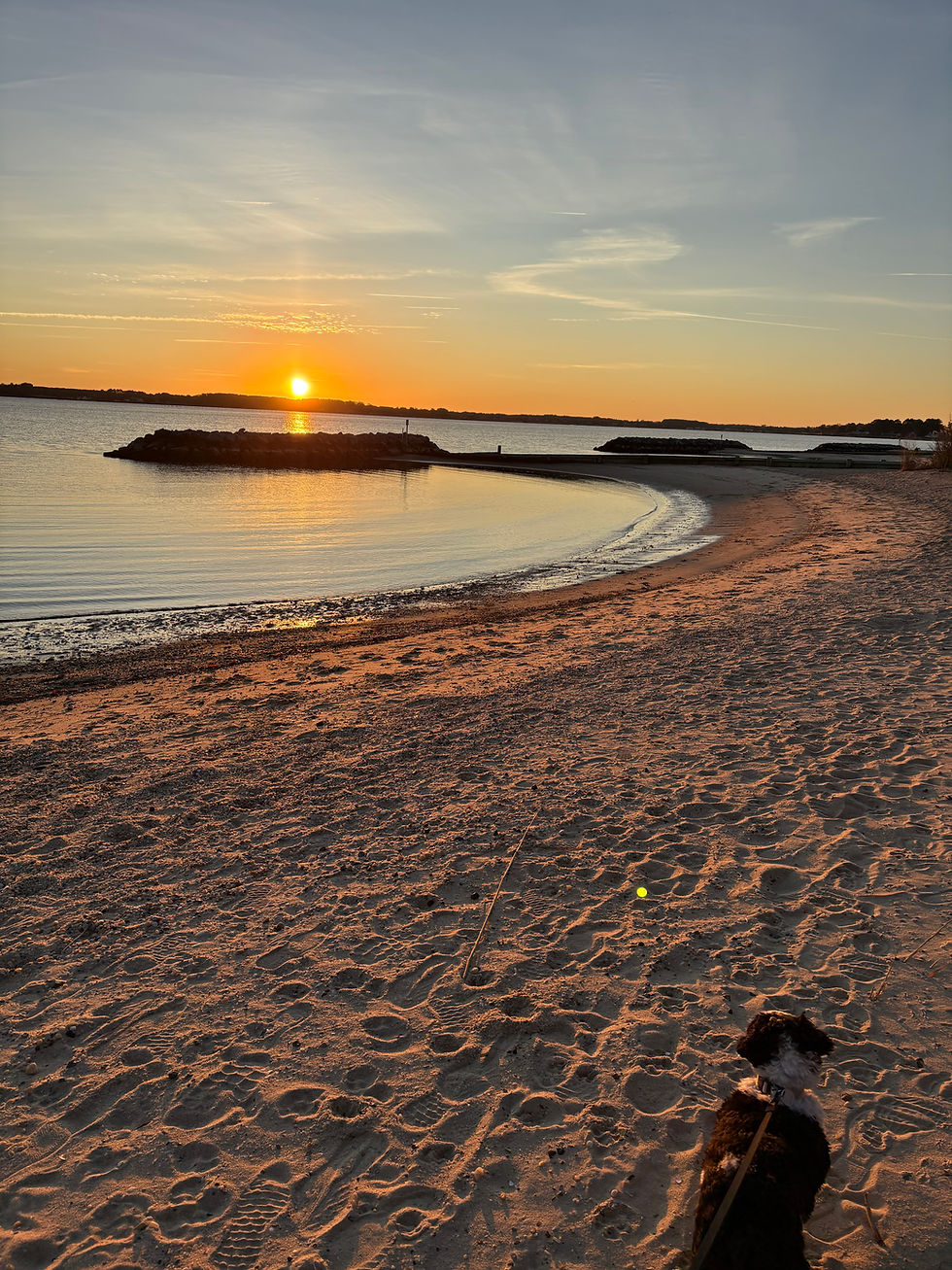
Since being diagnosed, my relationship with my body has shifted in ways that feel both intentional and necessary, and I have become more mindful of what I eat, more aware of the need to be outside, and more deliberate in creating small routines that support me, like taking sunrise beach walks when the weather allows and when my body cooperates, and even on the days when I cannot do much, having Crue encourages me to at least sit outside and be present in a way I might not have otherwise chosen.
The world itself still carries stress, and the current political climate is something I feel in ways that are not always easy to separate from my internal experience. At the same time, my day to day life is different now than it was in earlier parts of my life, and having a greater sense of autonomy over my decisions has made a noticeable difference in how I move through stress when it arises.
I am not perfect with my boundaries, and I do not move through life without missteps, but there is something about knowing that I notice more quickly now when something does not feel right, when something feels off, when something in me is asking for attention. Listening to my body when it signals that I am doing too much, allowing myself to stop without overexplaining it, choosing rest without negotiating it, and giving myself permission to recalibrate instead of pushing through, all of those choices have become a part of how I care for myself now.
I cannot undo what has already accumulated over the course of my life, and there is a certain honesty in accepting that without trying to rewrite it.
What I can do is shape how I live now.
And in doing that, I have created a life that allows for longer stretches of peace than I once thought were possible, and I find myself sitting in moments like this, in the sun, aware of my body in a way that feels grounded instead of disconnected, and that feels like something worth noticing.


Comments